
Sustainability in Motion: Green Logistics Practices in the Philippines and Canada
Updated: Aug 6, 2025
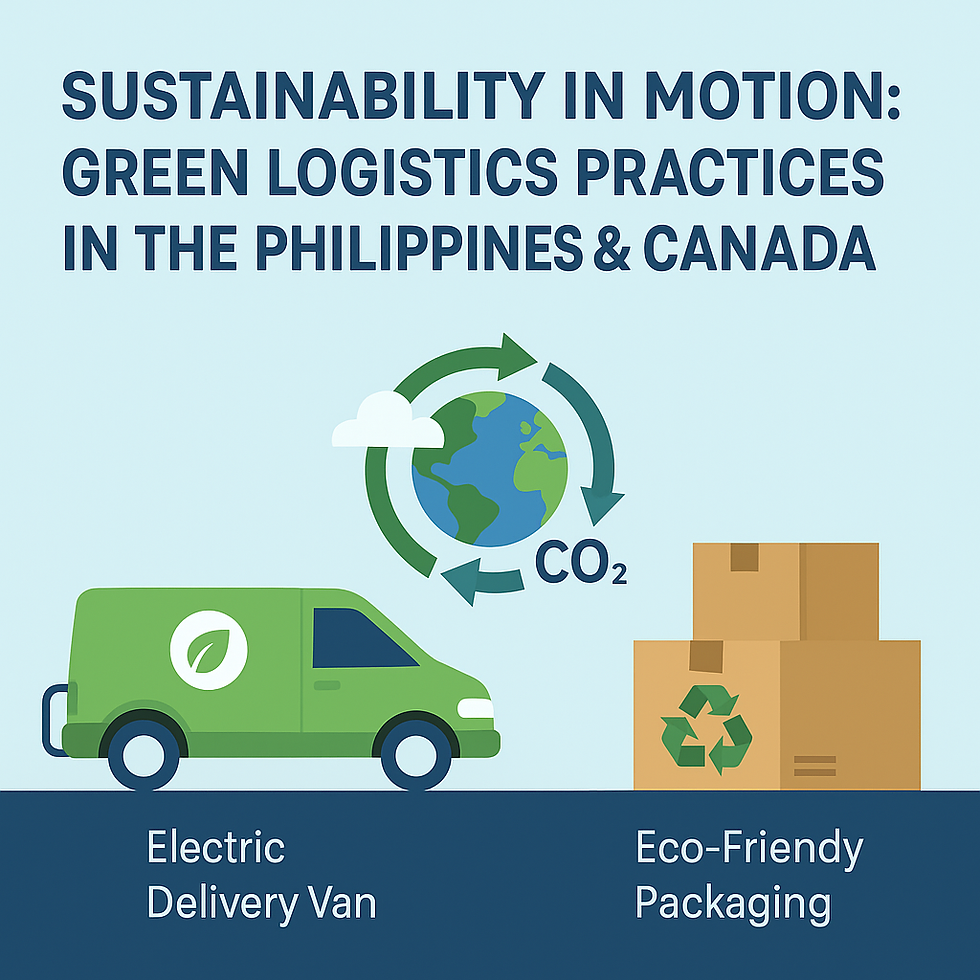
Sustainability has become a key focus across industries, and the logistics sector is no exception. As the environmental impact of traditional logistics operations grows, businesses in both the Philippines and Canada are seeking innovative solutions to reduce their carbon footprint and adopt greener practices. From electric vehicles (EVs) to carbon offset programs and eco-friendly packaging, green logistics is transforming the way goods are transported. This shift not only helps companies meet regulatory requirements but also responds to the growing demand for environmentally responsible business practices. In this blog post, we’ll examine the environmental impact of logistics operations, explore sustainability initiatives, and compare the adoption of green logistics practices in both countries.
The Environmental Impact of Logistics Operations:
Logistics is a vital component of the global economy, but it also contributes significantly to environmental issues such as air pollution, greenhouse gas emissions, and resource depletion. Transportation alone is responsible for a large percentage of carbon emissions, with trucks, ships, and planes emitting pollutants into the air. In the Philippines, where logistics is a rapidly growing sector, the environmental impact is becoming more noticeable, especially with the increase in shipping and road transport. In Canada, the challenges are similar, with heavy reliance on trucking and rail transport leading to a large carbon footprint.
To address these concerns, the logistics industry is increasingly exploring ways to reduce its environmental footprint while maintaining operational efficiency. This includes the adoption of cleaner technologies, smarter logistics planning, and a shift towards more sustainable practices.
Electric Vehicles (EVs) in Logistics:
One of the most promising solutions in the logistics industry is the adoption of electric vehicles (EVs) for transportation. EVs offer a cleaner alternative to traditional diesel-powered trucks, reducing harmful emissions and improving air quality. In the Philippines, electric vehicles are gaining traction in urban logistics operations, particularly for short-distance deliveries within city centers. Government initiatives to support EV adoption, such as subsidies and charging infrastructure development, are driving this shift.
In Canada, electric trucks and delivery vans are becoming increasingly popular, particularly in urban areas like Toronto, Vancouver, and Montreal. Canadian logistics companies are beginning to incorporate EVs into their fleets, benefiting from both government incentives and the desire to meet sustainability targets. However, the transition to electric vehicles presents challenges, including the need for charging infrastructure, battery range, and the upfront cost of purchasing EVs. Despite these challenges, the long-term environmental and cost benefits of EVs are making them an attractive option for businesses in both countries.
Carbon Offset Programs:
In addition to adopting electric vehicles, logistics companies are investing in carbon offset programs as a way to mitigate their environmental impact. These programs involve investing in projects that reduce or remove greenhouse gases from the atmosphere, such as reforestation, renewable energy projects, or methane capture initiatives. Carbon offsetting allows businesses to neutralize the carbon emissions they cannot eliminate directly through their operations.
In Canada, carbon offset programs are already a well-established practice within the logistics industry. Many companies, including major players in the transportation sector, are purchasing carbon credits to offset their emissions. The Canadian government also encourages businesses to participate in carbon offsetting programs through various incentives.
The Philippines, on the other hand, is still in the early stages of integrating carbon offset programs within the logistics sector. However, as the country continues to focus on environmental sustainability, more companies are beginning to explore these programs as part of their green logistics strategies. Local governments and environmental organizations are also working to raise awareness and provide businesses with the tools and resources needed to participate in carbon offset initiatives.
Eco-Friendly Packaging:
Another significant aspect of green logistics is the reduction of waste through eco-friendly packaging. Traditional packaging materials, such as plastic and Styrofoam, contribute to environmental degradation and pollution. As part of the move towards sustainability, companies in both the Philippines and Canada are exploring alternative materials that are biodegradable, recyclable, or reusable.
In Canada, many logistics providers are already implementing sustainable packaging solutions. Retailers such as Loblaws and Canadian Tire have made significant strides in using recyclable materials, while companies like Canada Post have adopted eco-friendly packaging for their mail and parcel services. By working with suppliers to reduce packaging waste, these businesses are contributing to a more sustainable supply chain.
In the Philippines, the shift toward eco-friendly packaging is still developing, but some companies are leading the way. Large e-commerce platforms like Lazada and Shopee are making strides by offering environmentally friendly packaging options to their customers. In addition, many local businesses in the Philippines are beginning to adopt biodegradable packaging, driven by both consumer demand and regulatory measures aimed at reducing plastic waste.
Comparing Green Logistics Practices in the Philippines and Canada:
While both the Philippines and Canada face similar environmental challenges in logistics, the pace of adoption of green practices differs. In Canada, sustainability has been a key focus in the logistics sector for several years, with many businesses already implementing electric vehicles, carbon offset programs, and eco-friendly packaging. Government support and consumer awareness are key drivers in this shift.
In contrast, the Philippines is in the early stages of adopting green logistics practices, but the country’s logistics industry is quickly recognizing the importance of sustainability. Increased pressure from global markets, coupled with rising environmental awareness among consumers and businesses, is pushing for faster adoption of green logistics practices. The government has started to implement policies aimed at reducing emissions and encouraging eco-friendly solutions, which will likely lead to faster growth in the green logistics sector.
Tips for Businesses to Optimize Green Logistics:
Adopt Electric Vehicles (EVs): Begin integrating electric vehicles into your fleet to reduce emissions and improve fuel efficiency.
Participate in Carbon Offsetting: Invest in carbon offset programs to neutralize emissions from your operations.
Use Sustainable Packaging: Transition to eco-friendly packaging materials like biodegradable or recyclable options.
Optimize Routes for Efficiency: Use digital tools to optimize delivery routes, reducing fuel consumption and carbon emissions.
Work with Green Partners: Partner with other businesses that prioritize sustainability to create a more eco-friendly supply chain.
Green logistics is not just a trend; it’s an essential step toward creating a more sustainable future for the logistics industry. Both the Philippines and Canada are making strides toward integrating environmentally friendly practices into their logistics operations, and companies that embrace these changes will be well-positioned for success. By adopting electric vehicles, participating in carbon offset programs, and switching to eco-friendly packaging, logistics companies can significantly reduce their environmental impact while improving efficiency and meeting the demands of an increasingly eco-conscious consumer base.
Ready to make your logistics operations more sustainable? Contact Mondial Logistics today to discuss how we can help your business transition to greener practices and reduce your environmental footprint.


Comments